

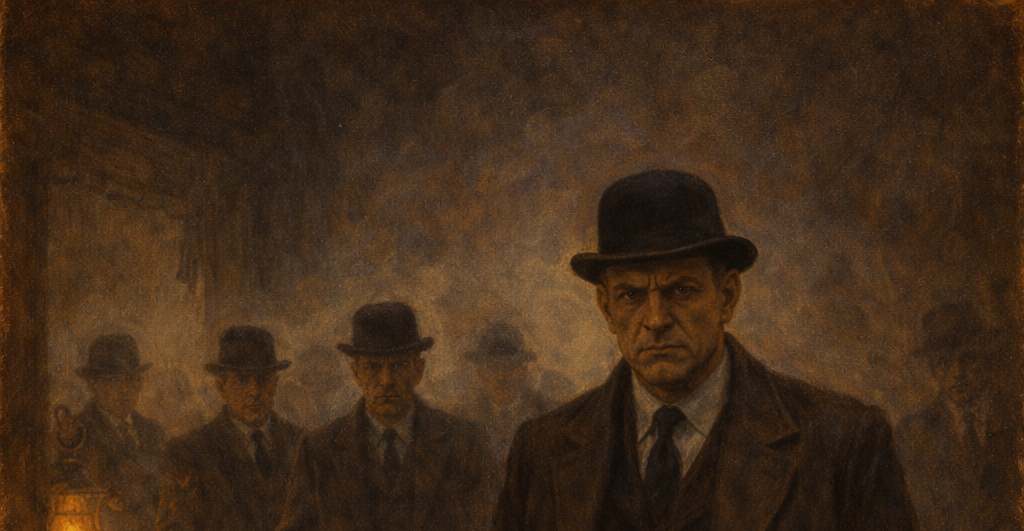
This fragment belongs to the world of Ashes & Iron, where opposition rarely arrives as a single force.
Lost Chapters in the Quiet Trades cycle examine the pressures that form outside the parish: grievances that outlive their origins, laws enforced by men who believe in them, and systems that define themselves as righteous. These scenes can be read in any order. They are not required to understand the books — but they reveal how conflict hardens, and how enemies organize themselves long before they announce their intent.
This fragment belongs to the world of Ashes & Iron, where opposition rarely arrives as a single force.
Lost Chapters in the Quiet Trades cycle examine the pressures that form outside the parish: grievances that outlive their origins, laws enforced by men who believe in them, and systems that define themselves as righteous. These scenes can be read in any order. They are not required to understand the books — but they reveal how conflict hardens, and how enemies organize themselves long before they announce their intent.
The Hollingsworth did not hate the Varns for money.
They hated them for memory.
The father had known Elias when the foundry was smaller, when its footprint fit neatly inside ambition instead of reshaping the land around it. Back then, partnership still sounded like friendship. Agreements were made over drinks. Futures were spoken aloud as if speaking them made them shared.
Now the elder Hollingsworth watched from the clean side of town and called his distance principle. He spoke of fairness. Of order. Of how things ought to be done.
But it was not principle.
It was inheritance.
The son wore his father’s grievance like a tailored coat—sharper, younger, fitted to a body that had not yet learned to compromise. Where the father remembered, the son refined. He did not want Elias ruined. Ruin was messy. Temporary.
He wanted him corrected.
To take back what the family believed had been stolen from them, and to do it cleanly enough that the town would accept the lesson. To ensure the story was told properly—who took, who lost, and who restored balance.
Inspector Darcy did not need proof.
He needed permission.
Temperance agents moved like a weather front, smiling in daylight and breaking doors at night. They carried warrants the way storms carried wind—indiscriminately, convinced of their own necessity. They did not drink. They did not bargain. They collected names the way some men collected trophies and called it virtue.
They spoke of moral clarity. Of public good. Of cleansing.
And they never stayed long enough to see what was left behind.
Then there was Hughes.
U.S. federal Prohibition agent.
He crossed borders as if they were suggestions and treated jurisdiction like a joke shared among professionals. He was not chasing whiskey. Bottles were noise. Evidence. Distractions.
He was chasing networks.
Routes. Bribes. Patterns of cooperation that survived raids and adapted to pressure. He wanted the quiet men—the ones who moved goods without speeches, who kept books without names, who understood that systems lasted longer than laws.
In his world, the real prize was not the bottle.
It was the hand that passed it.
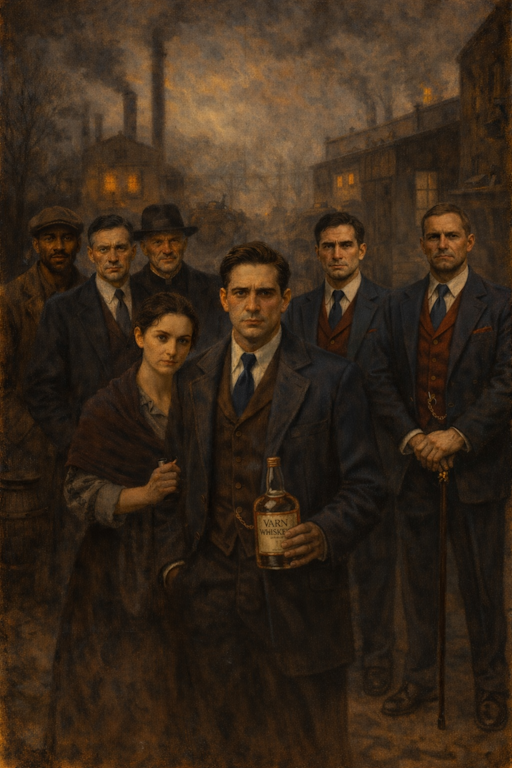
That was what Elias was up against.
Not one enemy.
A system of them.
Old grudges refined into doctrine. New laws enforced with enthusiasm. Men who slept well at night because they had convinced themselves they were saving the world—one broken door at a time.
Pressure did not announce itself.
It accumulated.
Enemies are easiest to face when they pretend to be righteous.
This moment belongs to the larger world of Ashes & Iron.
The full saga begins where these fragments leave off.

Leave a Reply