 Skip to content

This fragment belongs to the world of Ashes & Iron, where survival often arrives quietly and without permission.
Lost Chapters capture moments that never announce themselves as important: routines formed in heat and shadow, mercies extended without witnesses, lives preserved not by strength or law but by proximity and chance. These scenes can be read in any order. They are not required to understand the books — but they reveal the fragile bargains struck every day between hunger, labor, and endurance.
They didn’t name him.
Naming is a kind of claim, and in a place like Varn & Sons, nothing stayed yours for long. Names implied ownership. Responsibility. A future. The foundry had no use for such promises.
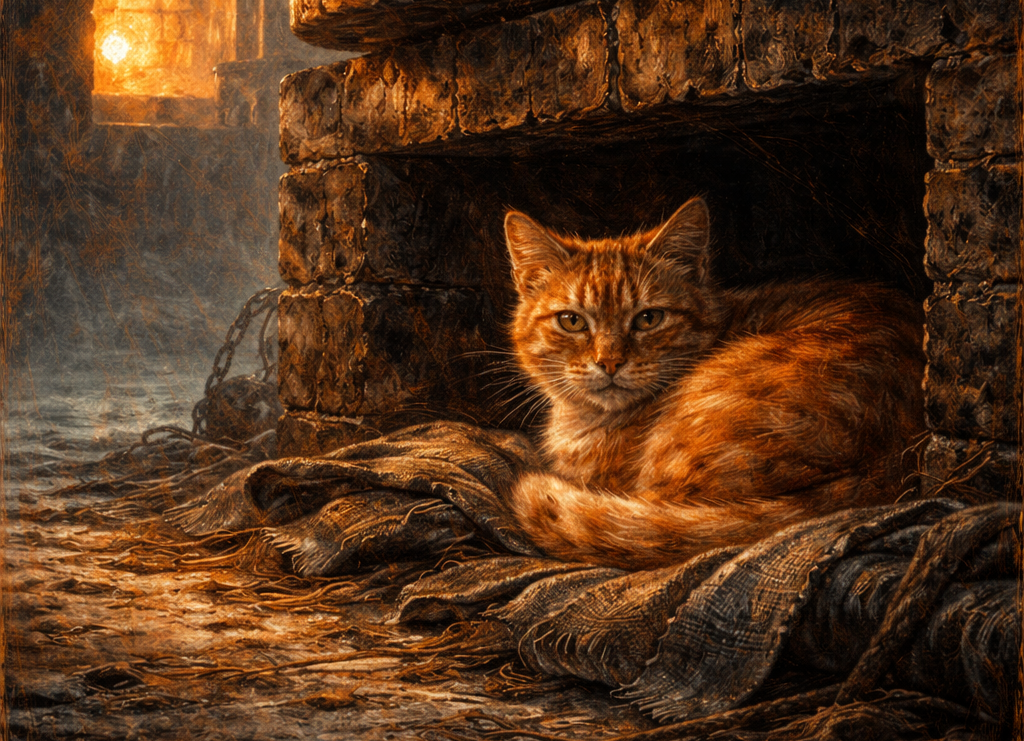
The cat lived where the heat lived—under the boilers, behind the brick, in the narrow pocket of warmth the winter couldn’t reach. He moved through the foundry as if he belonged to the building itself, slipping between shadows and steam, appearing where the floor was warmest and the air smelled of iron and oil.
The men pretended they didn’t see him.
A cat in a foundry was bad luck, they said. A creature that walked where it pleased while men sweated for every inch they earned. A reminder that some things took warmth without paying for it.
But the rats knew better.
And so did the boys.
On nights when the furnaces were banked low and the floor went quiet, the boys would leave him offerings: a strip of fat wrapped in paper, a heel of bread hardened by cold, whatever mercy they could steal from their own hunger without being missed. They did it quickly, eyes flicking toward the shadows, as if generosity itself might be counted against them.
He would appear without sound—a shadow stitched to the soot. No purring. No begging. Just eyes like small coins catching the light. He ate what was left for him and never more. Then he would sit with them, close enough to share warmth, far enough to remind them that warmth was never free.
They learned not to reach for him. Some things stayed safer when they were allowed to choose their distance.
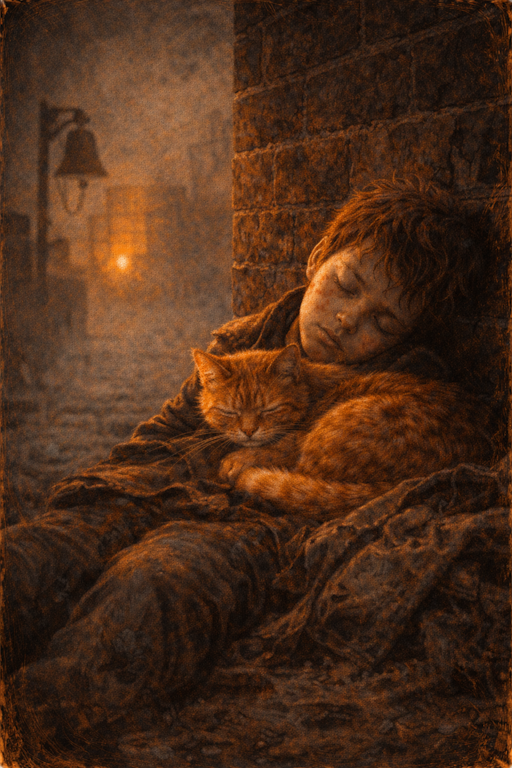
Once, a boy fell asleep against the bricks and didn’t wake to the bell. He had come in early and stayed too long, letting the heat ease the ache from his hands and feet until it dulled everything else. When the whistle sounded, he did not answer it.
They found him at dawn.
Still breathing.
The cat was curled on his chest, a compact weight, ribs rising and falling beneath soot-dark fur. He did not move when the men gathered. He did not look up. He simply stayed where he was, as if daring the world to argue with him.
No one tried.
They woke the boy carefully. Wrapped him in a coat that wasn’t his. Sent him home without questions. By the time the sun reached the high windows, the cat was gone again, back into the brick and heat where explanations could not follow.
No one spoke of it later. There was no rule for such things. No entry in any ledger.
But the boys remembered.
They remembered that the foundry could take.
And that sometimes, quietly, it chose not to.
Warmth is never free. Breathe. Just breathe.
This moment belongs to the larger world of Ashes & Iron.
The full saga begins where these fragments leave off.

Leave a Reply